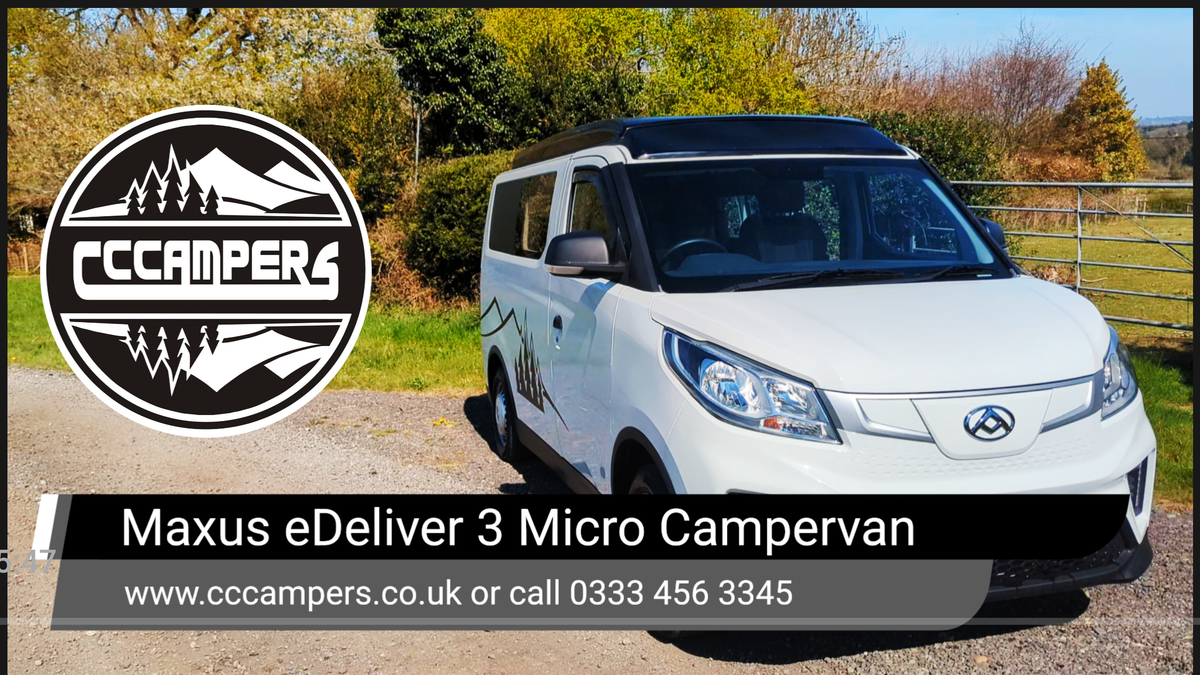
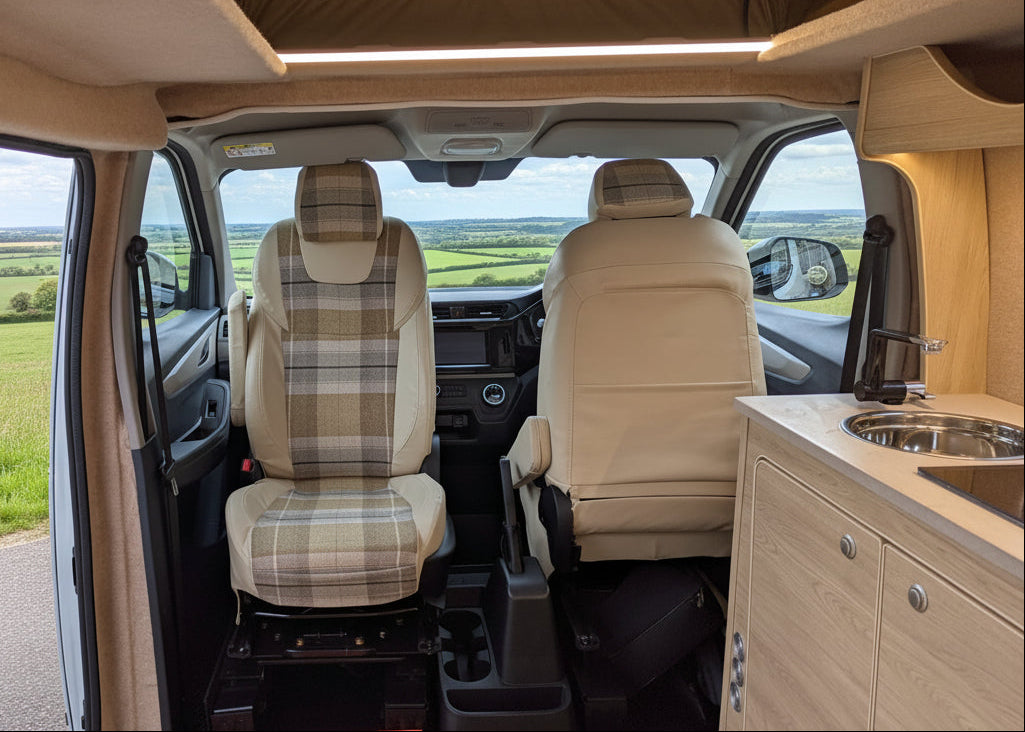
Maxus eDeliver 3 Kinlet Electric Micro Campervan by CCCAMPERS
Maxus eDeliver 3 Kinlet Electric Micro Campervan by CCCAMPERS
Maxus eDeliver 3 Electric Campervan – The Kinlet by CCCAMPERS
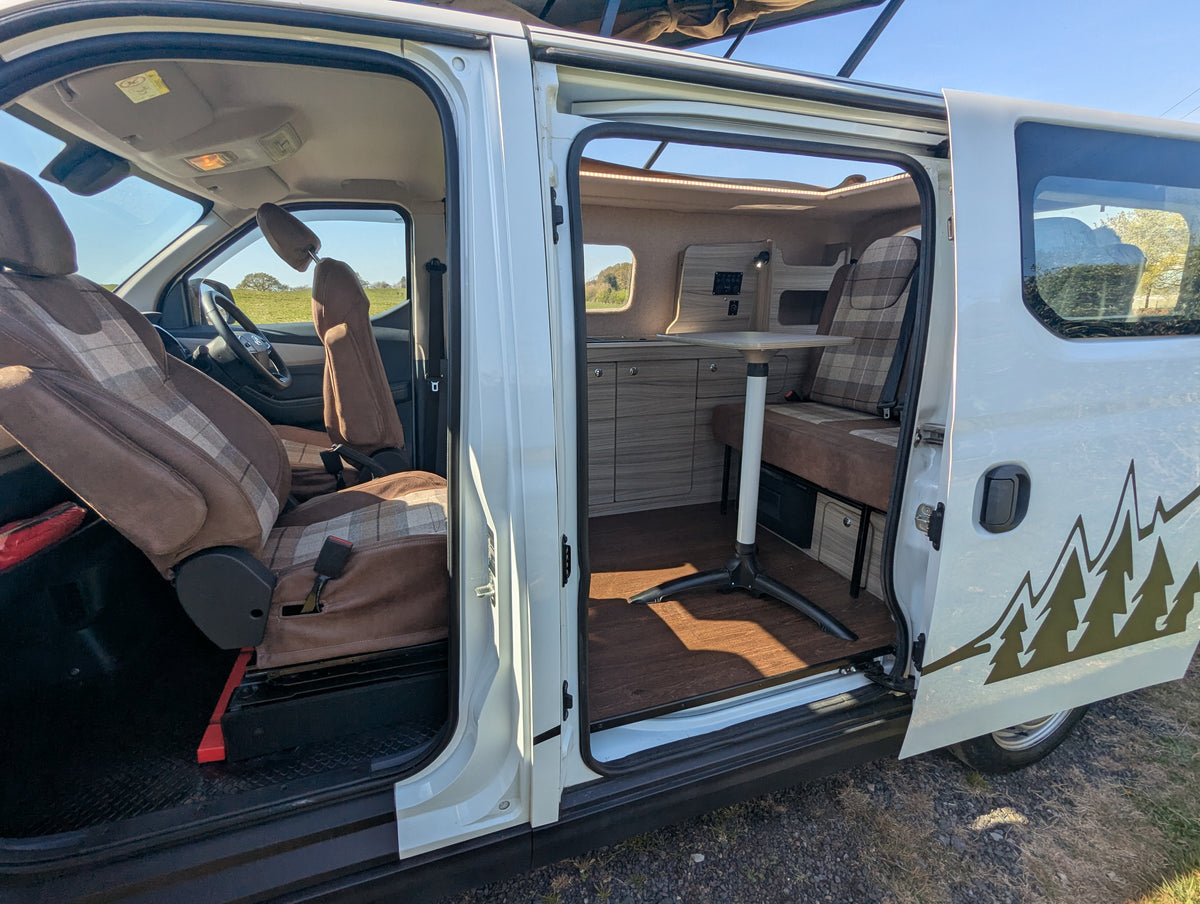
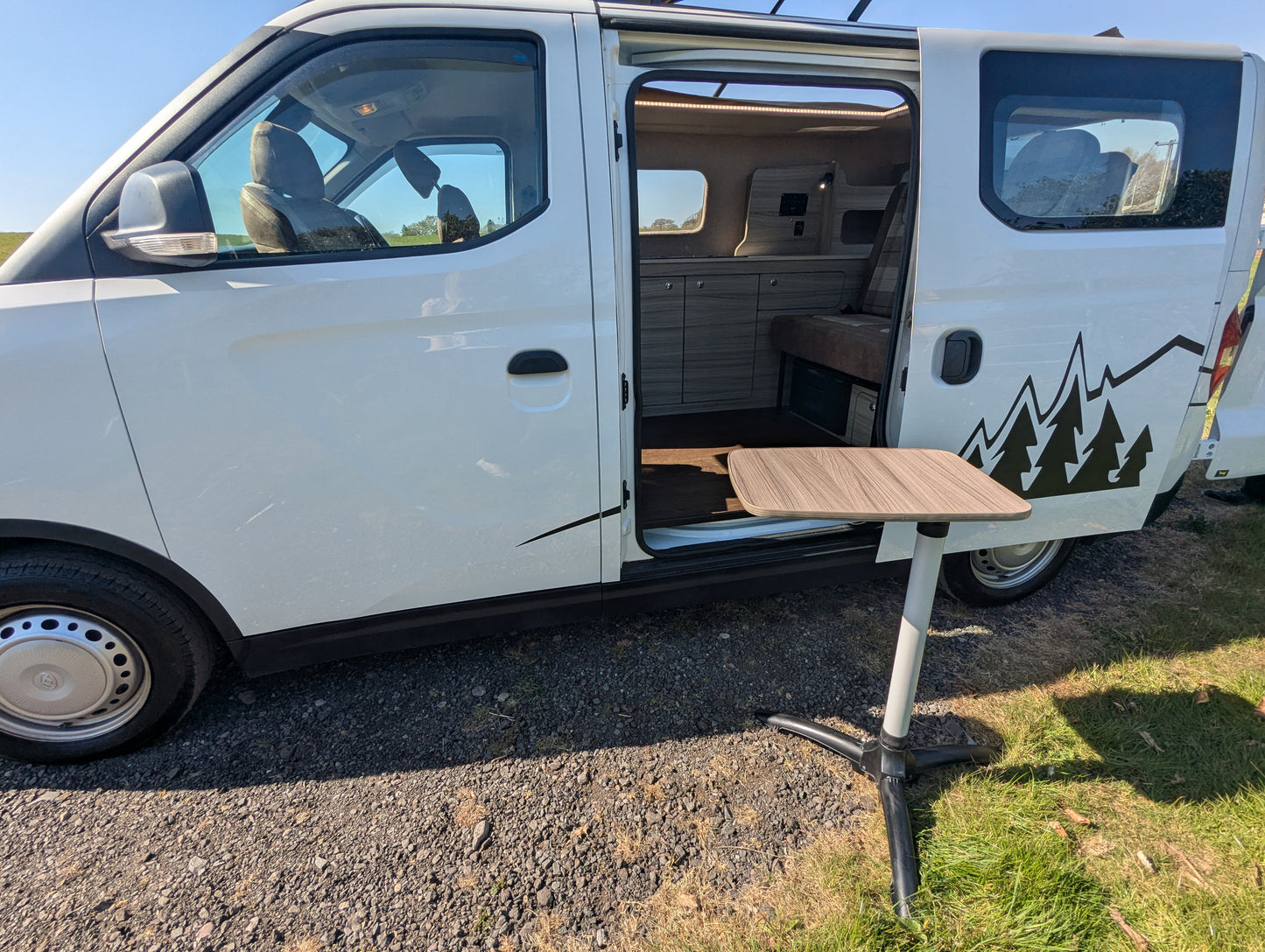
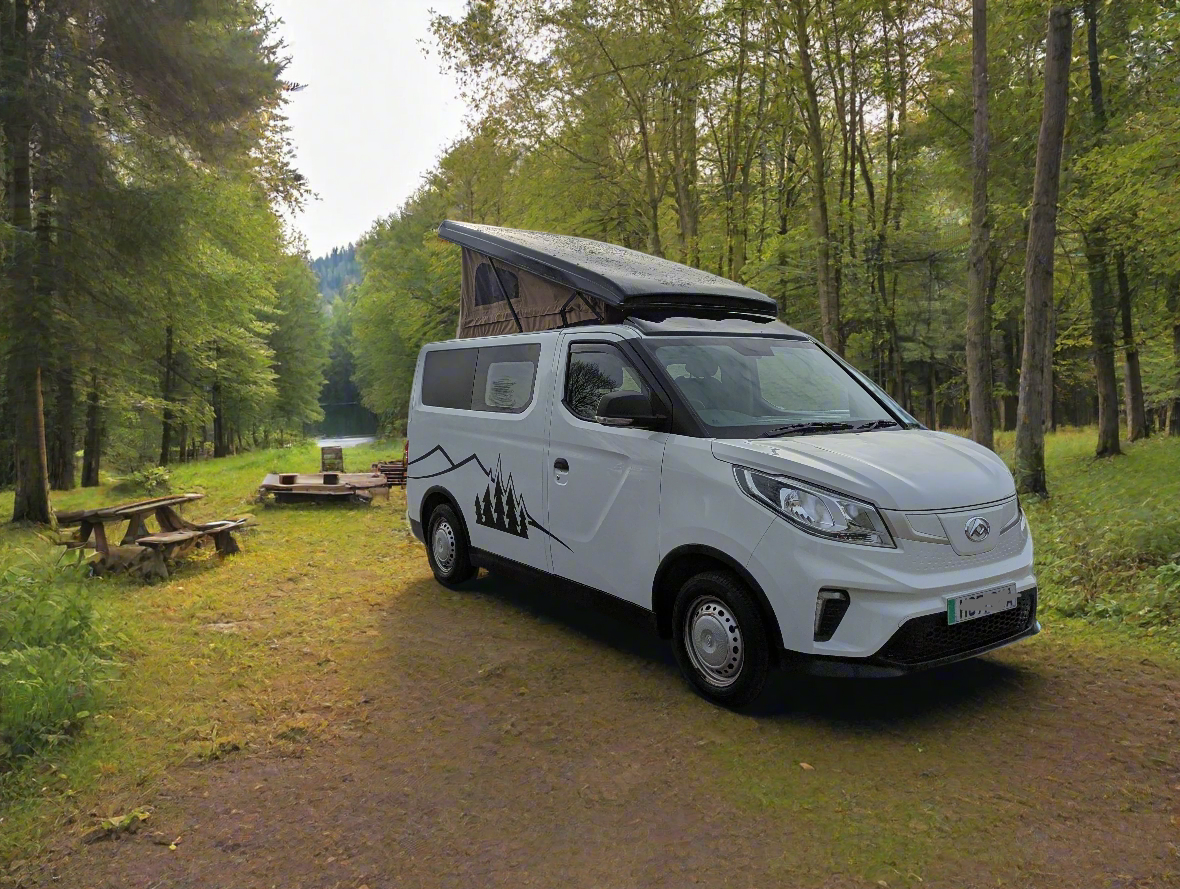
The Kinlet is a complete all-electric micro campervan based on the Maxus eDeliver 3 and converted by CCCAMPERS in Worcestershire. At approximately 4,555mm long and 1,780mm wide, it combines compact everyday dimensions with a gas-free kitchen, independent lithium habitation power, an elevating pop-top roof and a choice of three- or four-seat layouts.
Prices start from £38,999. The selected vehicle year, mileage, layout and optional upgrades determine the final specification and price.
Important: this listing is for a complete campervan based on the selected vehicle, not a conversion-only price. Confirm the exact base vehicle, battery, mileage, payload, doors and included equipment with CCCAMPERS before ordering.
Why choose the Maxus eDeliver 3 for a campervan?
The electric platform offers quiet driving, zero tailpipe emissions and a useful load-carrying platform for a compact conversion. The quoted unconverted payload can be up to approximately 905kg depending on the exact base vehicle. The finished payload must always be checked for the individual campervan after its conversion and optional equipment are fitted.
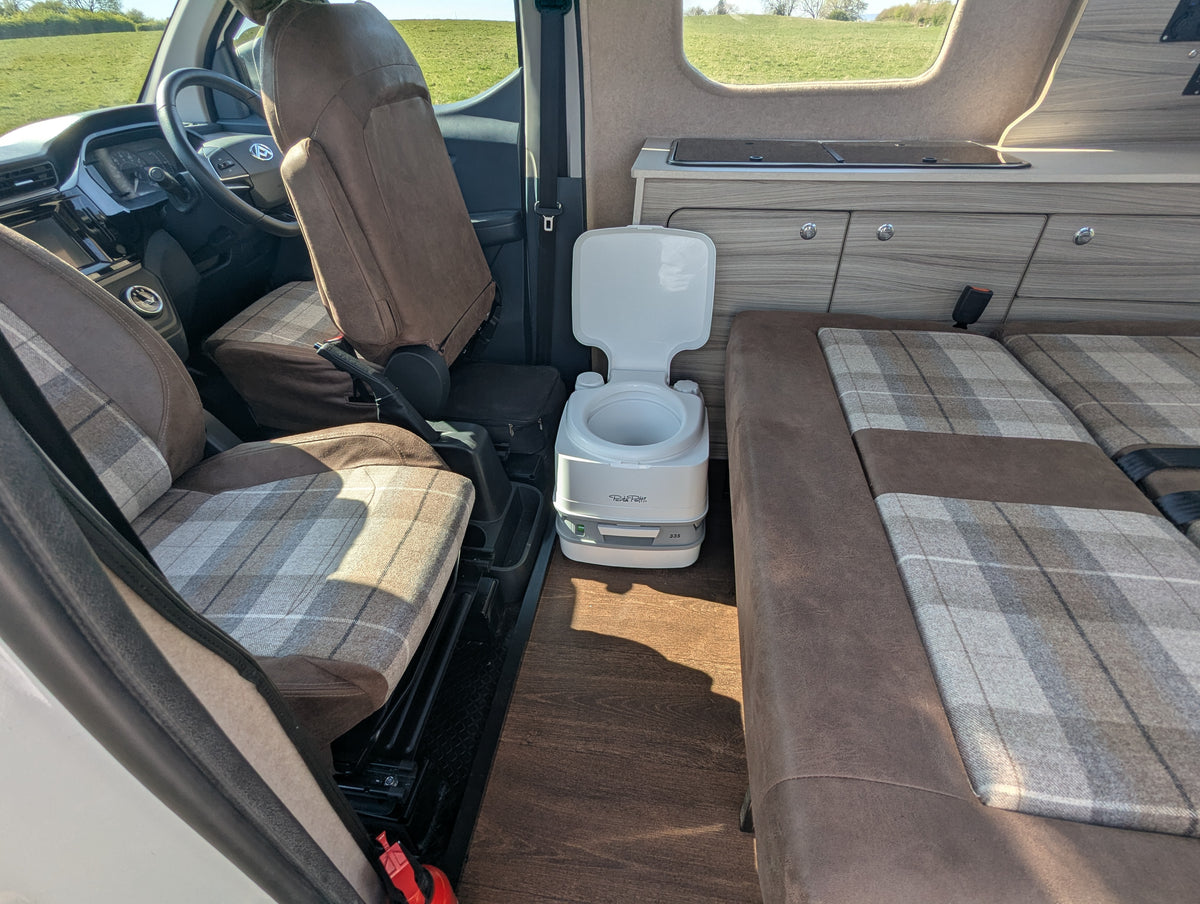
The usable interior floor length is approximately 2,180mm, helping provide room for the galley, storage and rear seat/bed within a compact body. Finished height is specification-dependent and must be confirmed before entering any height-restricted car park or barrier.
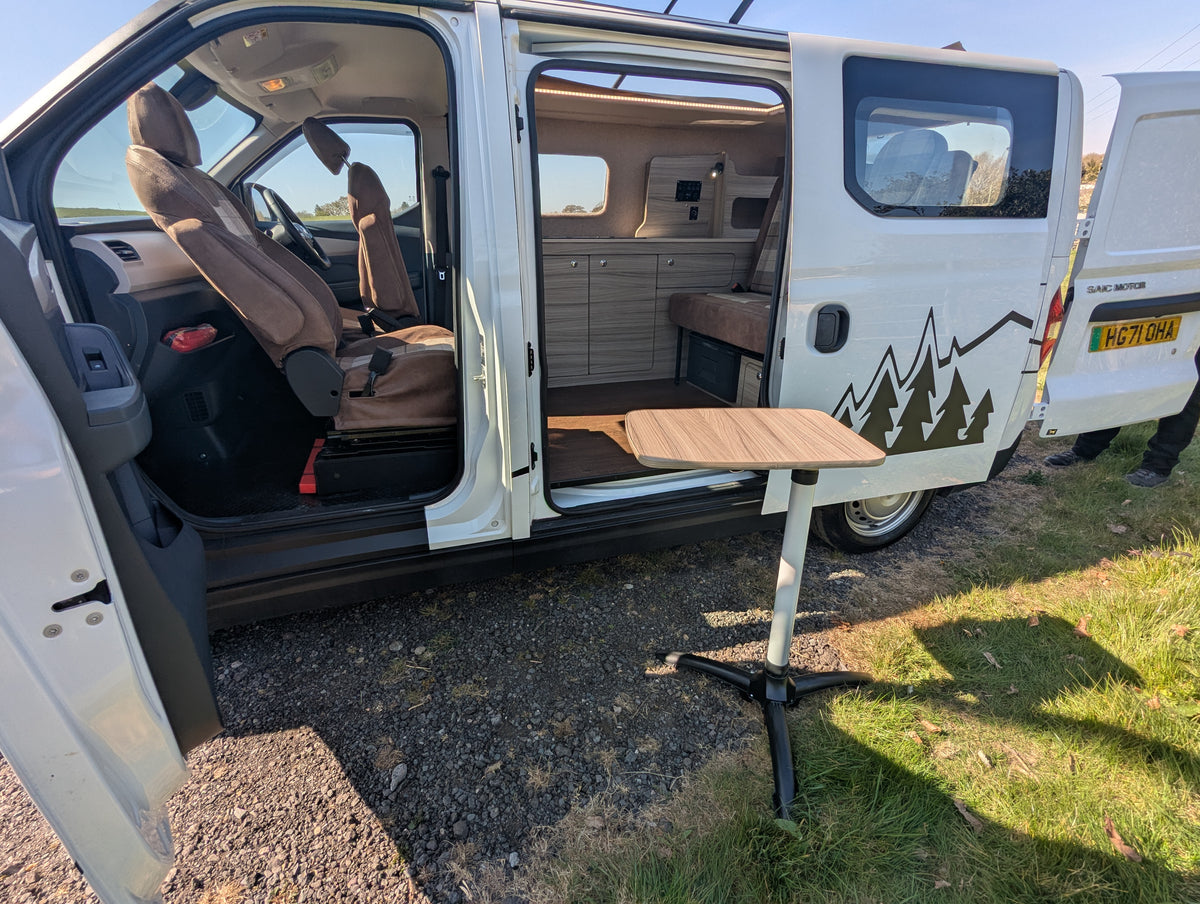
Duo and Solo layouts
Duo: four travelling seats
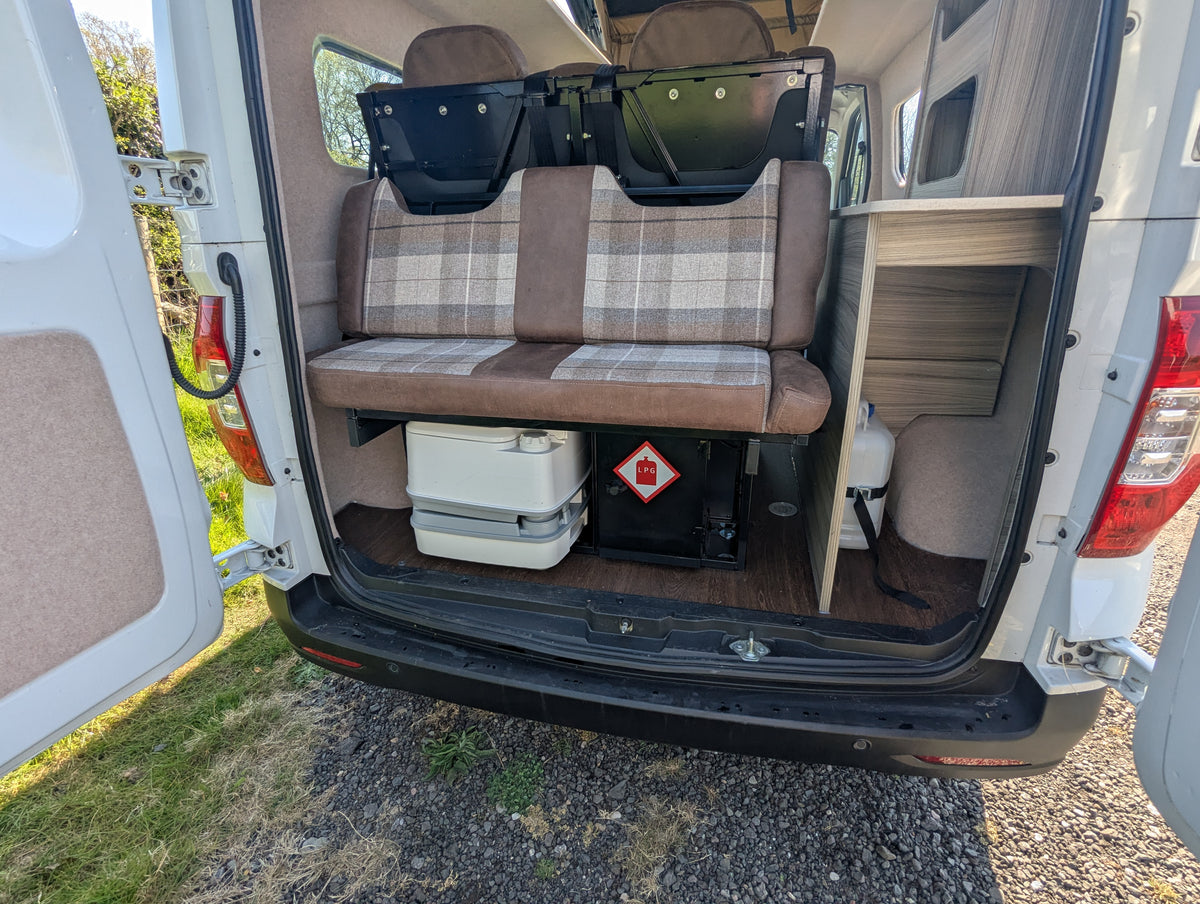
- Double rear travelling seat and lower bed
- M1 pull-tested seat/bed installation
- Designed for couples or families needing four travel seats
Solo: three travelling seats
- Single rear travelling seat/bed arrangement
- More open floor space for solo travellers and couples
- Three travelling seats in total
The listed lower lounge-bed dimensions are approximately 1,100mm × 1,830mm; confirm the bed dimensions for your selected Duo or Solo layout. An upper roof bed and infill board are optional, with listed dimensions of approximately 1,050mm × 1,900mm. Travelling-seat numbers are not berth numbers. A four-berth arrangement should only be specified for a Duo with the optional upper roof-bed equipment, once the intended sleeping capacity is confirmed by CCCampers. Do not assume that the Solo sleeps four.
Payload Breakdown (Maxus eDeliver 3)
The unconverted standard panel van with a 50kWh / 52.5kWh battery may have a baseline payload of approximately 905–1,045 kg, depending on the specific gross vehicle weight (GVW), model year and vehicle rating. These are illustrative baseline figures, not the confirmed legal payload of any particular finished Kinlet.
For this worked example, allow 310 kg for conversion and kitchenware (290 kg assumed standard conversion plus 20 kg pots and pans), then 95 kg per traveller (75 kg person plus 20 kg personal luggage). The total added weight is 405 kg for one person, 500 kg for two, 595 kg for three, and 690 kg for four.
| Travellers | Total added weight | Estimated remaining payload at 905 kg baseline |
|---|---|---|
| 1 | 405 kg | 500 kg |
| 2 | 500 kg | 405 kg |
| 3 | 595 kg | 310 kg |
| 4 (Duo only) | 690 kg | 215 kg |
If the exact van has a verified baseline payload of 1,045 kg instead, add 140 kg to each estimated remaining figure. Four travellers require the four-seat Duo; the Solo has three travelling seats. These examples assume a 290 kg conversion and exclude any difference in the actual vehicle, fitted options, water, extra luggage or other equipment. Check the selected vehicle's plated GVW and axle limits, and weigh the completed campervan with its actual equipment and loading. A positive estimated balance does not by itself establish that a loaded vehicle is within legal limits.
Standard 320Ah lithium and 2000W inverter system
The Kinlet’s habitation equipment uses a dedicated leisure-power system. The standard setup is designed for controlled use of the gas-free kitchen, fridge, lighting, water system and everyday devices:
- 320Ah LiFePO4 leisure battery
- 2000W pure sine wave inverter
- Seven-inch touchscreen system monitor
- 30A DC-to-DC charging system configured for the electric vehicle platform
- 200W roof-mounted solar panel with MPPT controller
- 80A mains battery charger
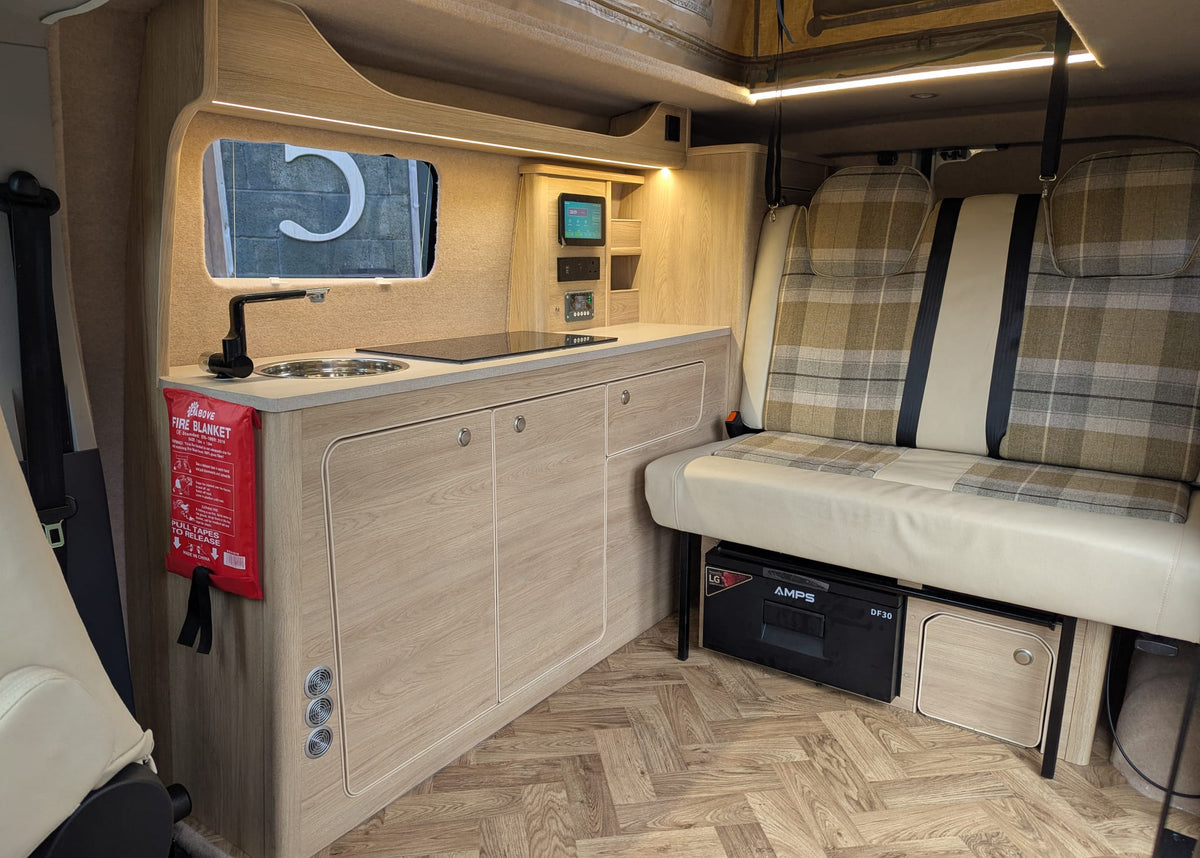
- 1500W single induction hob
- Electrical equipment specified for its intended automotive and habitation application
Optional 640Ah and 3000W higher-use upgrade
For customers who want greater stored energy and more inverter headroom, the optional higher-use package upgrades the Kinlet to a 640Ah LiFePO4 battery bank and 3000W pure sine wave inverter, with twin induction cooking available as part of this upgrade. It is better suited to heavier cooking loads, frequent use of domestic-style appliances and longer stays away from campsite hook-up. Explore the Nomad Power Upgrade for details.
Actual off-grid duration depends on cooking, heating, refrigeration, weather, solar input, charging opportunities and battery condition. Appliance use must remain within the continuous and combined-load limits of the selected inverter.
Intelligent Grid Priority System
When connected to a campsite hook-up, the intelligent grid-priority system temporarily pauses leisure-battery charging while a high-demand cooking appliance is in use. This reduces the combined demand placed on the campsite supply and helps lower the risk of tripping its breaker. Battery charging resumes automatically when the cooking load ends.
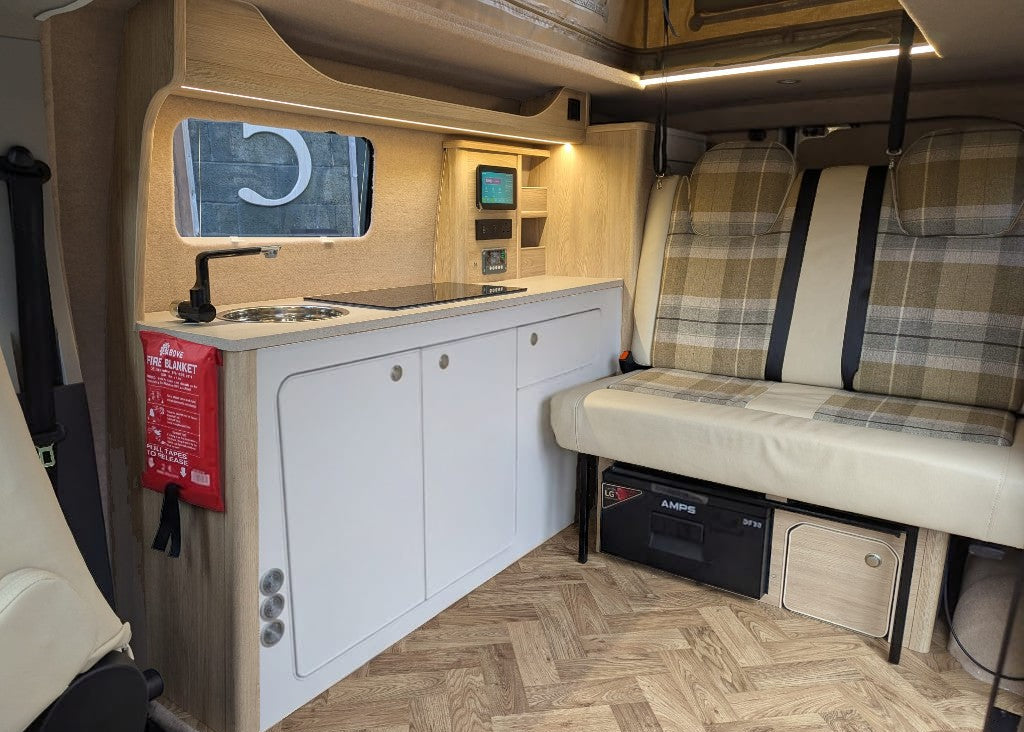
Gas-free kitchen, water and refrigeration
- 1500W single induction hob as standard, with no LPG bottle required; twin induction available with the optional 640Ah/3000W higher-use upgrade
- 30L low-draw compressor fridge with Bluetooth temperature monitoring
- 30L fresh-water tank positioned within the insulated interior
- Fast-charge USB points throughout the living area
- Hand-built cabinetry and durable tailored upholstery
Kit out your campervan kitchen
Looking for those useful extras for cooking, brewing and eating on the road? Browse campervan kitchen appliances & accessories to find items for your touring setup. These accessories are purchased separately, not included in the Kinlet specification.
Before choosing an electrical appliance, check its power requirements against your Kinlet’s fitted inverter and the available campsite supply. Keep the combined load of appliances used together within the limits of your selected electrical system.
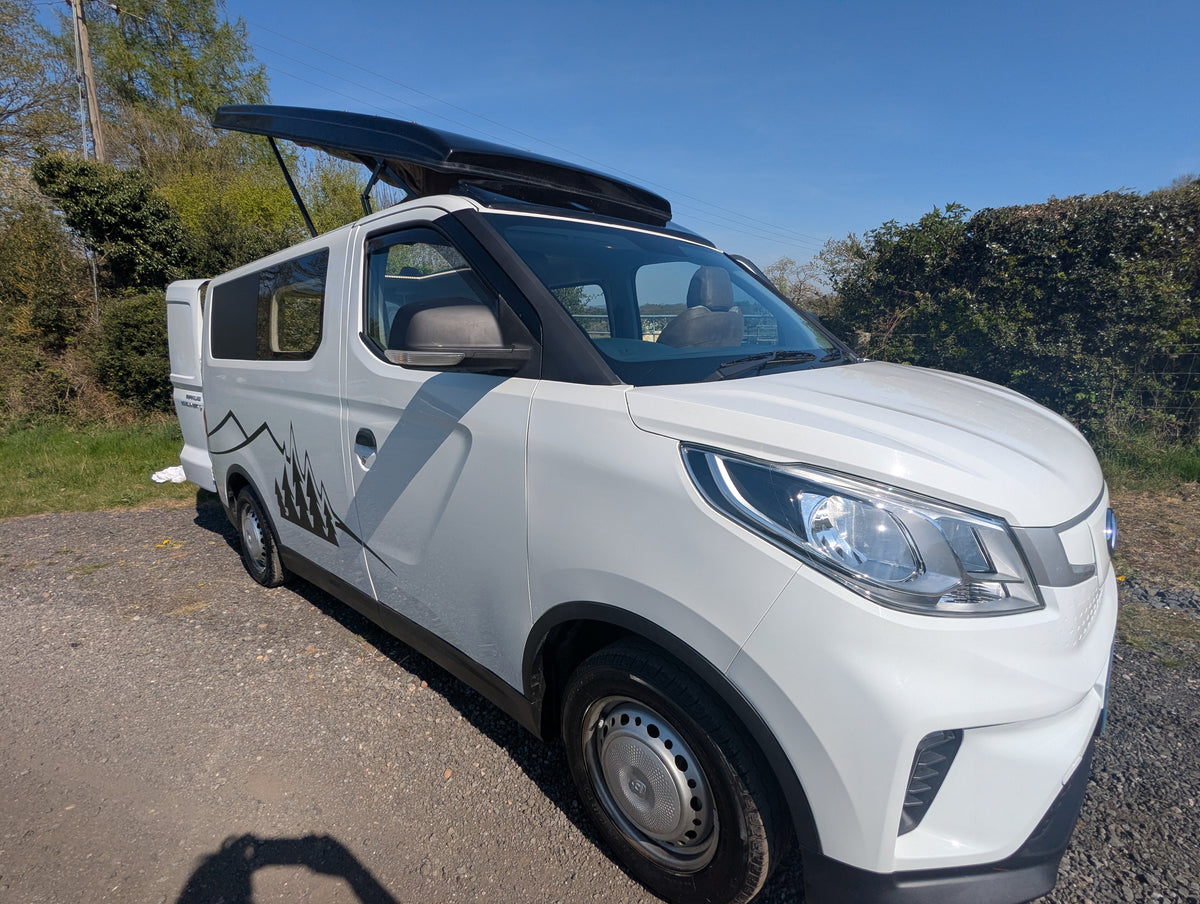
Rear-opening Stargaze pop-top roof
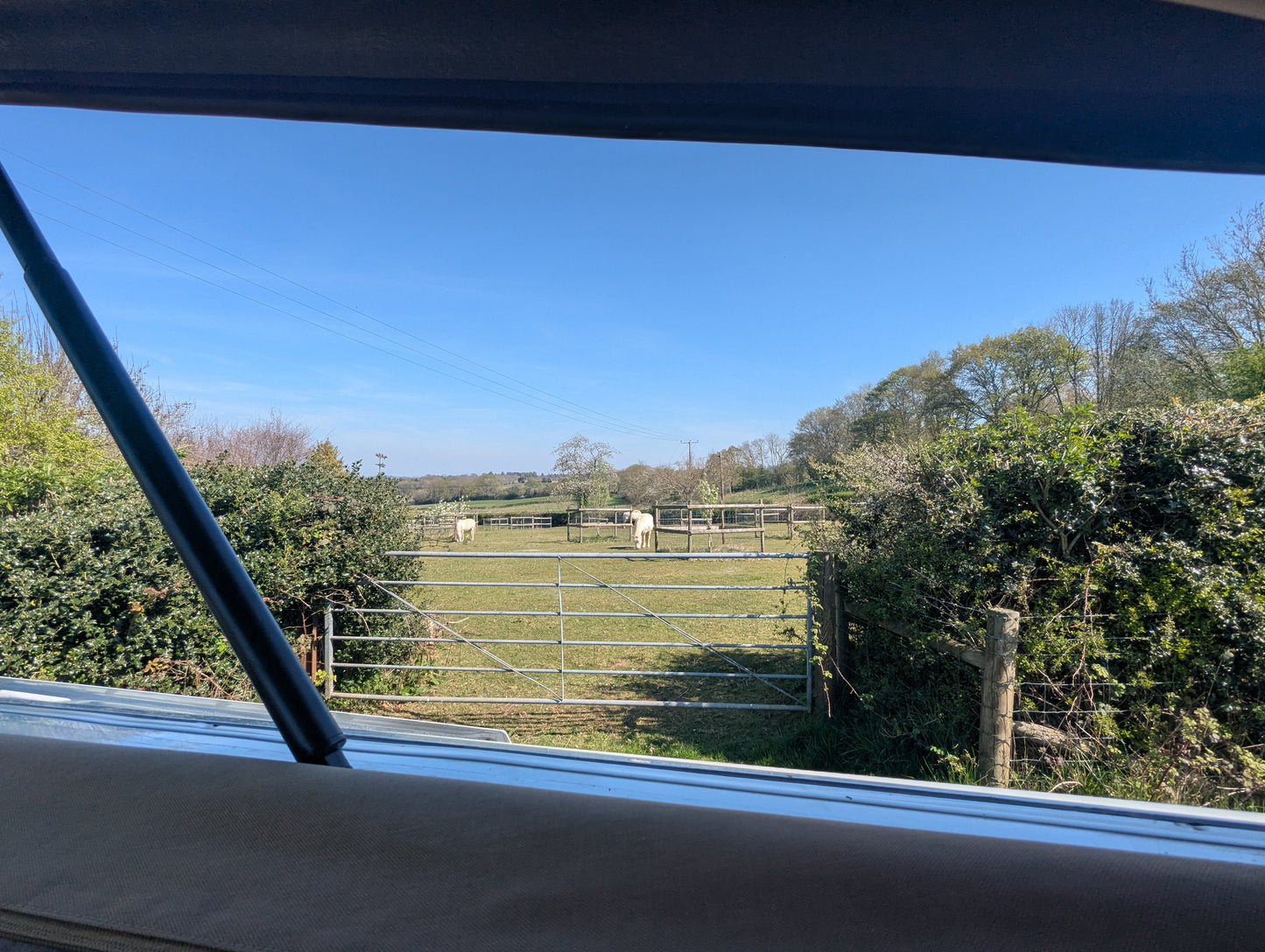
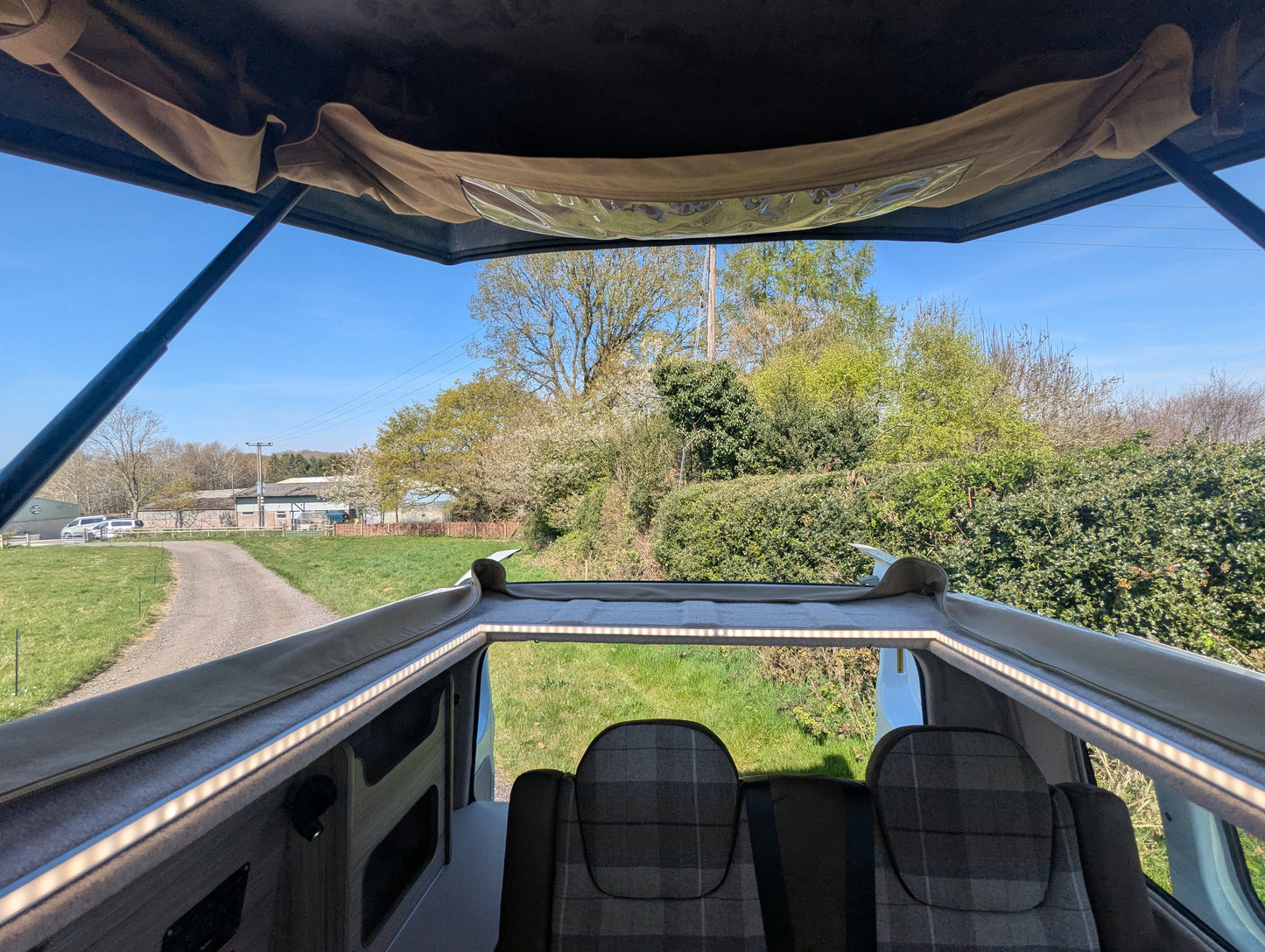
The elevating Stargaze roof raises at the rear to provide standing room around the kitchen and additional ventilation when pitched. Its panoramic canvas can be opened for wider views. The optional upper bed and infill board are not included as standard.
The closed vehicle height is intended to remain compact, but roof rails, solar equipment, tyres, suspension and other accessories can alter the finished measurement. Always confirm the measured height of the individual campervan rather than relying on a generic two-metre claim.
Heating and year-round touring
- 120W integrated underfloor heating
- 12V blown-air “Chill Beater” climate system
- Three-stage thermal and acoustic insulation
- Tailored framed blackout curtains
- Dimmable halo LED lighting
Cold-weather endurance varies significantly with outside temperature and heating use. The 640Ah upgrade provides more stored habitation energy, but it does not make off-grid duration unlimited.
Driving range and charging
Published figures associated with the eDeliver 3 can reach approximately 213 miles in city testing or 151 miles combined, depending on the model and test cycle. A converted campervan’s real-world range varies with vehicle year, traction battery, payload, speed, temperature, heating, terrain and driving style. Confirm the specification of the selected base vehicle rather than applying one range figure to every Kinlet.
The habitation battery system is separate from the high-voltage traction battery. Using camper equipment does not directly power appliances from the traction battery, although the conversion’s weight and external accessories can influence driving efficiency.
Optional Kinlet upgrades
- 640Ah LiFePO4 battery bank and 3000W inverter, with twin induction cooking available
- Upper roof bed and infill board
- Alloy wheels and roof rails
- Pressurised hot-water system, external utility shower and toilet storage
- Flush cellular blinds
- Bike rack, compatible tow bar and wind-out awning
Optional equipment can affect payload, height, range and final price. CCCAMPERS confirms compatibility during the specification process.
Underbody and corrosion protection
The Kinlet receives CCCAMPERS’ underbody and corrosion-protection treatment as part of its preparation for British road conditions. The treatment is intended to add protection against moisture, winter road salt, road debris and coastal environments. Like any protective treatment, it should be inspected and maintained over the vehicle’s life.
Campervan safety standards
CCCampers builds its campervan conversions to the applicable British and harmonised European standards. Our electrical installations incorporate protective earthing and bonding appropriate to the fitted mains hook-up and inverter systems, following BS 7671 Section 721 and the applicable motorcaravan requirements of BS EN 1648.
Our approach also follows BS EN 1646-1 for habitation health and safety, BS EN 721 for permanent safety ventilation, and BS EN 13878 for terminology. Travelling-seat and seat-belt anchorage installations follow the applicable vehicle M1 requirements, including UN ECE R14 where relevant, with approval and test evidence specific to the installation.
Our gas-free Maxus eDeliver 3 Kinlet conversions use induction cooking rather than an LPG cooking installation. CCCampers combines IMI Level 3 TechSafe EV/hybrid training, NCC Academy Trained personnel and AWS Approved Workshop status.
Who builds the Kinlet?
The conversion is completed by CCCAMPERS at our Worcestershire workshop. Relevant credentials include IMI TechSafe Level 3 EV training, NCC Academy Trained personnel and Approved Workshop Scheme experience. These qualifications help make CCCAMPERS one of the most qualified campervan converters in the UK for specialist EV conversion work.
Frequently asked questions
How much does a Maxus eDeliver 3 campervan cost?
The Kinlet starts from £38,999. Final pricing depends on the vehicle year, mileage, layout, condition and optional equipment.
Can the Kinlet run an induction hob, kettle or other 240V appliances?
Yes, provided the appliance and combined loads stay within the selected inverter’s limits. The standard system has a 1500W single induction hob and 2000W inverter; the optional 640Ah/3000W higher-use upgrade can include twin induction cooking.
How long can the Kinlet camp off-grid?
There is no reliable single duration. The standard 320Ah system suits normal touring, while the optional 640Ah system provides more stored energy for heavier use. Heating, cooking and weather make the largest differences.
Does the camper equipment reduce the electric driving range?
The habitation equipment runs from a separate leisure battery, not directly from the traction battery. Vehicle weight, roof equipment and driving conditions can still affect real-world range.
Is the Kinlet less than two metres high?
The target finished height is around two metres, but the individual vehicle must be measured. Accessories, tyres, suspension and roof equipment can change the final height.
Does the Kinlet sleep four people?
Not as standard. Four travelling seats in the Duo do not mean four sleeping berths. A four-berth Duo requires the optional upper roof bed and infill-board package, with the intended sleeping capacity confirmed by CCCampers for the selected vehicle. The Solo has a single rear seat/bed arrangement and must not be assumed to sleep four. Confirm the lower-bed and optional roof-bed capacities before ordering.
Is the Kinlet suitable for winter camping?
It includes insulation, underfloor heating and blown-air climate control. Winter battery endurance depends on temperature and heating use, so the electrical package should be chosen around the customer’s touring plans.
Where is the Kinlet campervan built?
It is converted by CCCAMPERS at our Worcestershire workshop for customers across the West Midlands, Wales and the wider UK.
Read our Maxus eDeliver 3 campervan buyer’s guide for more detail on range, payload, layouts and off-grid power.
Book a Kinlet consultation with CCCAMPERS or call 0333 456 3345.